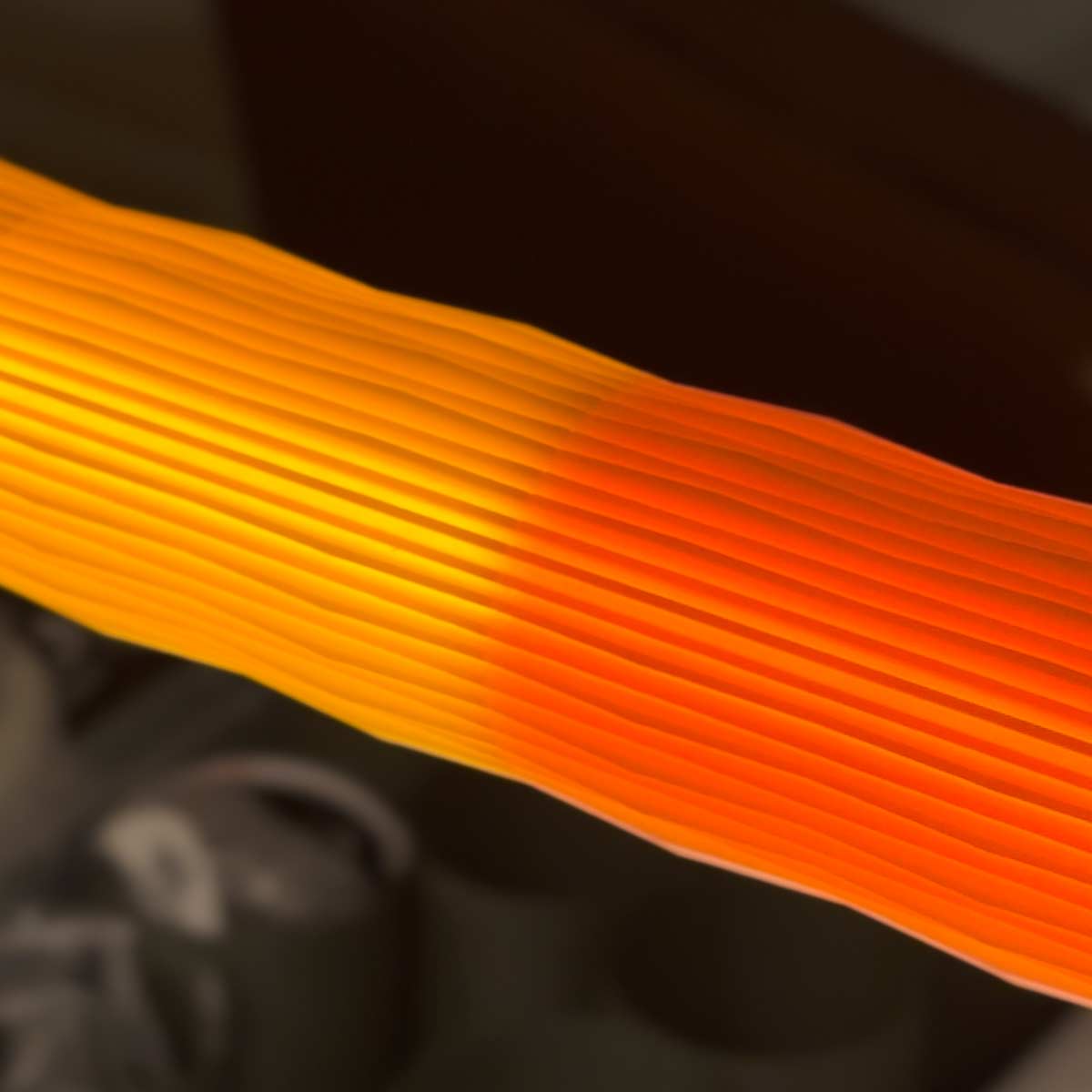
A factory in a basement in Nørrebro
We make our lamps – Dash and Shell – in a low-ceilinged basement in inner Nørrebro, 42 meters from Skt. Hans Torv – and we claim that producing this way isn’t just possible, but in many ways better than a typical factory somewhere in Eastern Europe or Asia.
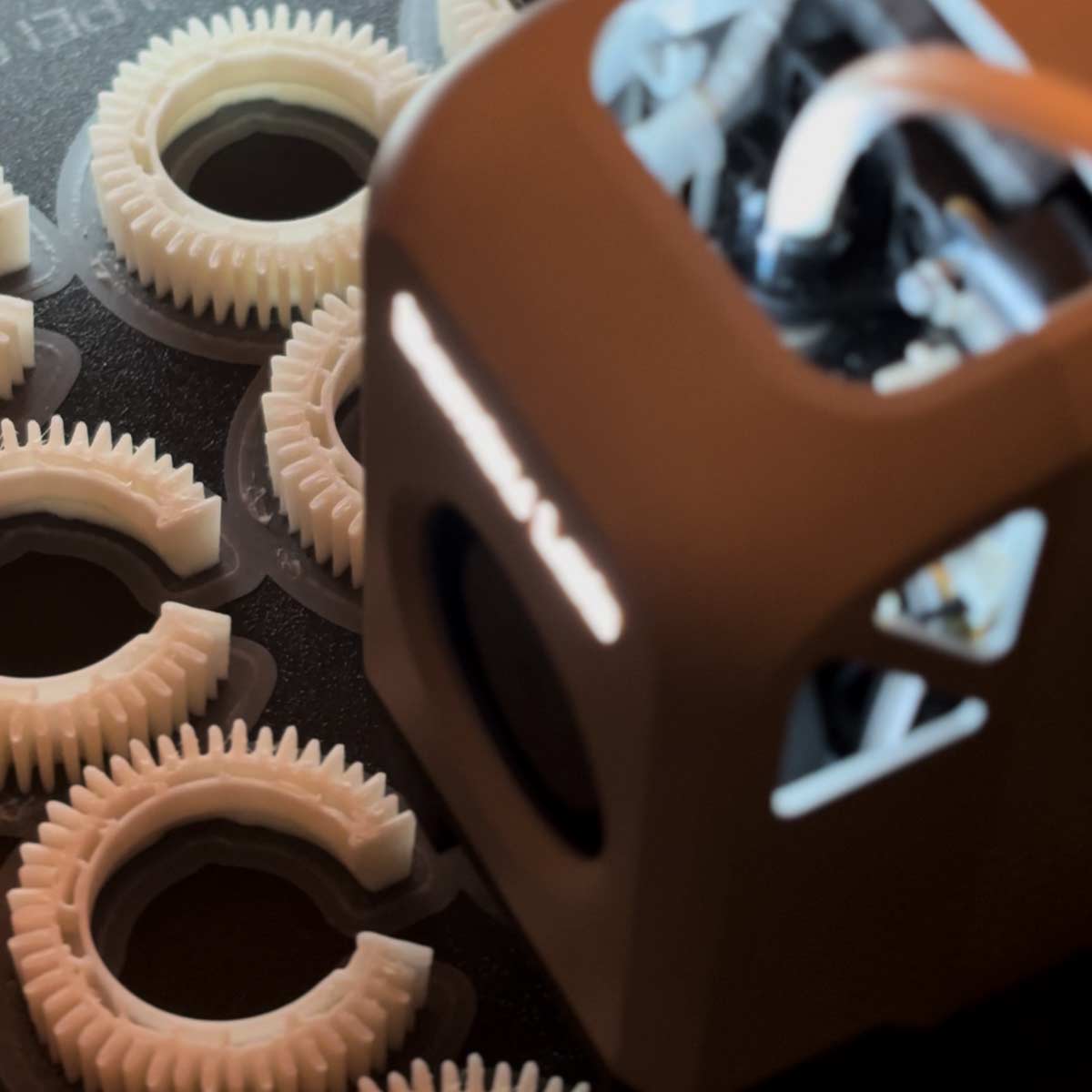
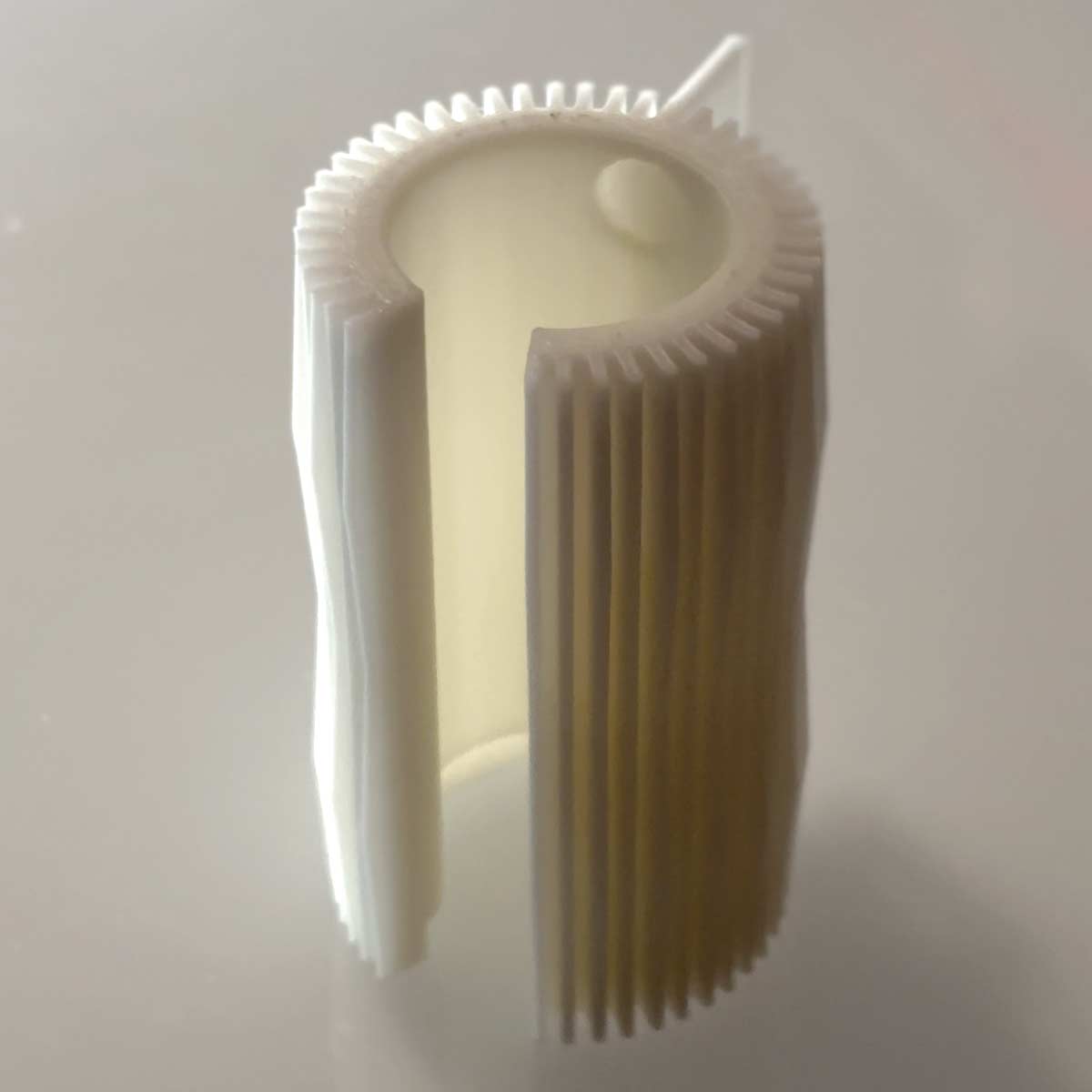
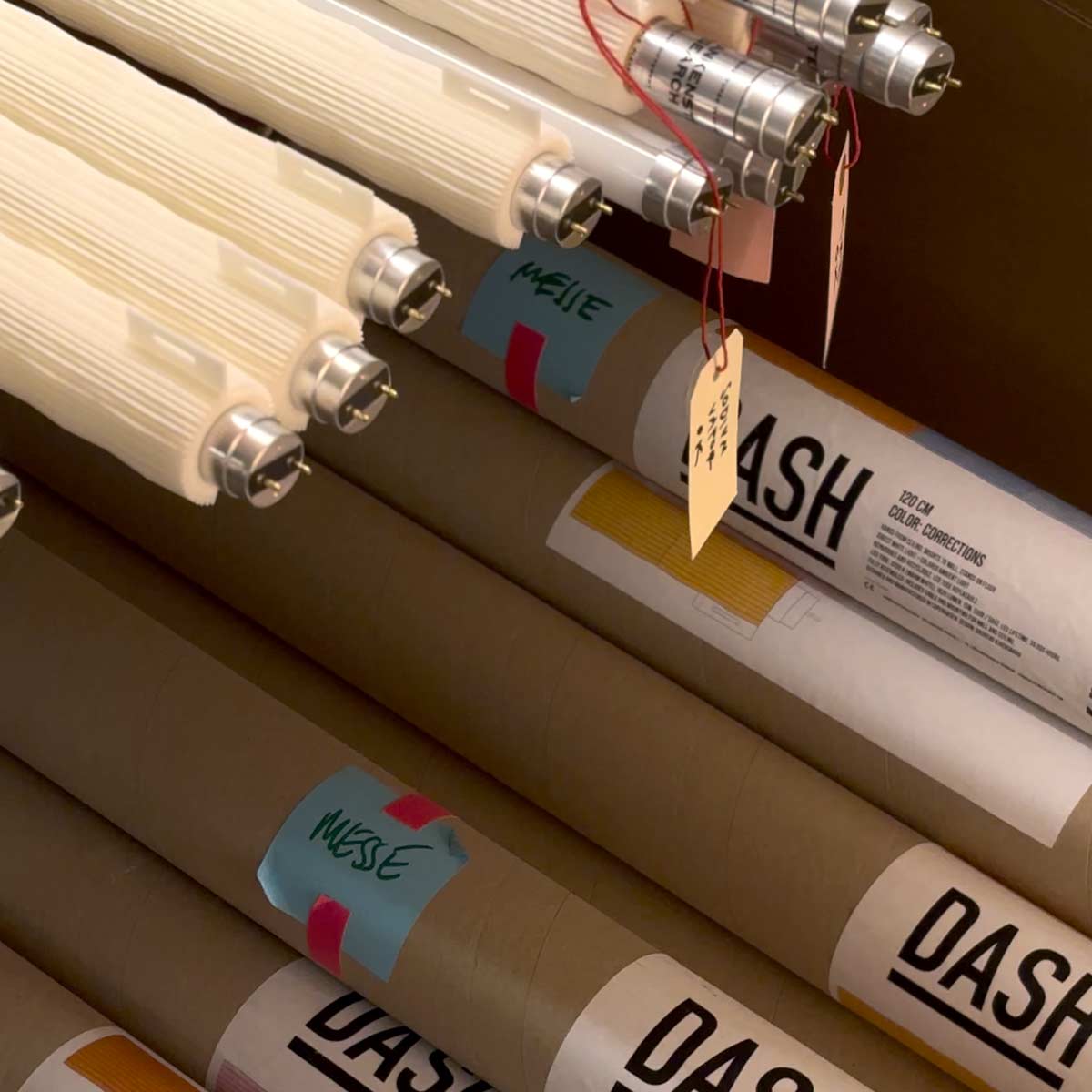
It rests on one principle: we only design what we can either build ourselves or find as existing standard components.* For Dash, that means 3D-printed shades and mounts, plus parts like steel wire, screw nipples and LED tubes, which are easy and cheap to get even in small quantities – all assembled by hand, by us. For Shell, it’s a single printed shade that grips a standard A60 bulb, with an off-the-shelf socket and cable. More about the production below.
* Inspired in part by Charles and Ray Eames’ Case Study House No. 8 in Pacific Palisades, designed around off-the-shelf steel parts.
See how we 3D-print parts and assemble finished lamps in a micro-production in a basement in inner Nørrebro, and hear about the pros and cons of working this way. Visits are free and without obligation. Places are limited: at most six guests per visit. Expect 10 to 30 minutes, depending on how curious you are.
No visiting days are scheduled right now. Write to [email protected] if you’d like to drop by, and we’ll find a time.
Quality
Everything we make consists of standard components and parts we 3D-print ourselves, all assembled by hand, by us. That means we can follow every step of production and inspect every single lamp. If something goes wrong, we spot it immediately – not much later.
Flexibility
Making things ourselves gives us two big advantages in flexibility.
First, we can iterate continuously. If we find that something can be done better – higher quality, faster, fewer defects – we can adjust the process within hours or days, at hardly any cost beyond time.
Second, we only need to make the lamps we actually sell, in the order we sell them (or with a small buffer, to ship faster).
Sustainability
Because we only make what we actually sell, we don’t risk sitting on a stock of overproduced lamps. A minimal stock also means less handling, storage and transport.
Dash can be assembled and taken apart into its separate materials without tools. Nothing is glued (except the power connection), and every part is available as a spare. The light source – a standard LED tube – can be replaced, unlike in most LED lamps.
Shell is printed from post-consumer recycled PETG – old bottles and packaging – made in Sweden. It comes off the bulb by hand, and the bulb, socket and cable are standard parts you can replace anywhere.
We recycle all ABS offcuts from production, and we’ll take lamps back and recycle the material if proper waste sorting isn’t available where you live.
Economics
Made the traditional way, a lamp like Dash would cost around one million kroner for the first batch. Injection molds alone, milled from steel or aluminum, can cost hundreds of thousands of kroner.
A production like ours can be started for about 10% of that, including the 3D printers and other tools.
At a large enough volume, traditional production is clearly cheaper. But for a long time, making things yourself doesn’t just give the best quality, flexibility and sustainability – it’s also the most economical.